Evanescent Light
Photographs of the Cosmos by Ian Parker
Clicking on the underlined text legend below any of the images in the galleries will open a copy in a new tab, sized to 1000 pixels in width or height. Use your browser BACK button to return you to the gallery. If you find a picture you like you can download the image at full original resolution by clicking on the gallery lmage itself. To save a downloaded image, right click on it and scroll to 'save picture as...'. To use an image as your desktop background, right click and scroll to 'set as background...'.
Visitors are welcome to download images for personal use (e.g. as computer desktop wallpaper). Click HERE to order prints online. Please contact Ian Parker at evanescentlightphotography@gmail.com regarding possible commercial use. Details of copyright, image use and licensing are HERE. |
|
|
EditRegion3
| |
A planetary nebula is a short-lived (approx. 20,000 years) astronomical phenomenon formed when intermediate-mass stars, like our Sun, die and cast off their outer layers. These glowing, often colorful shells of ionized gas and dust are not related to planets; they were misnamed in the 18th century due to their round, planet-like appearance in early telescopes. They are critical to the universe as they enrich the interstellar medium with elements like carbon and nitrogen.
Depending on their age (how much they have expanded) and their distance from Earth they may appear anywherre between bright and very small, to large and very faint. They emit primarily at Ha and OIII wavelengths, making them good targets for narrowband imaging even under light polluted skies.
| |
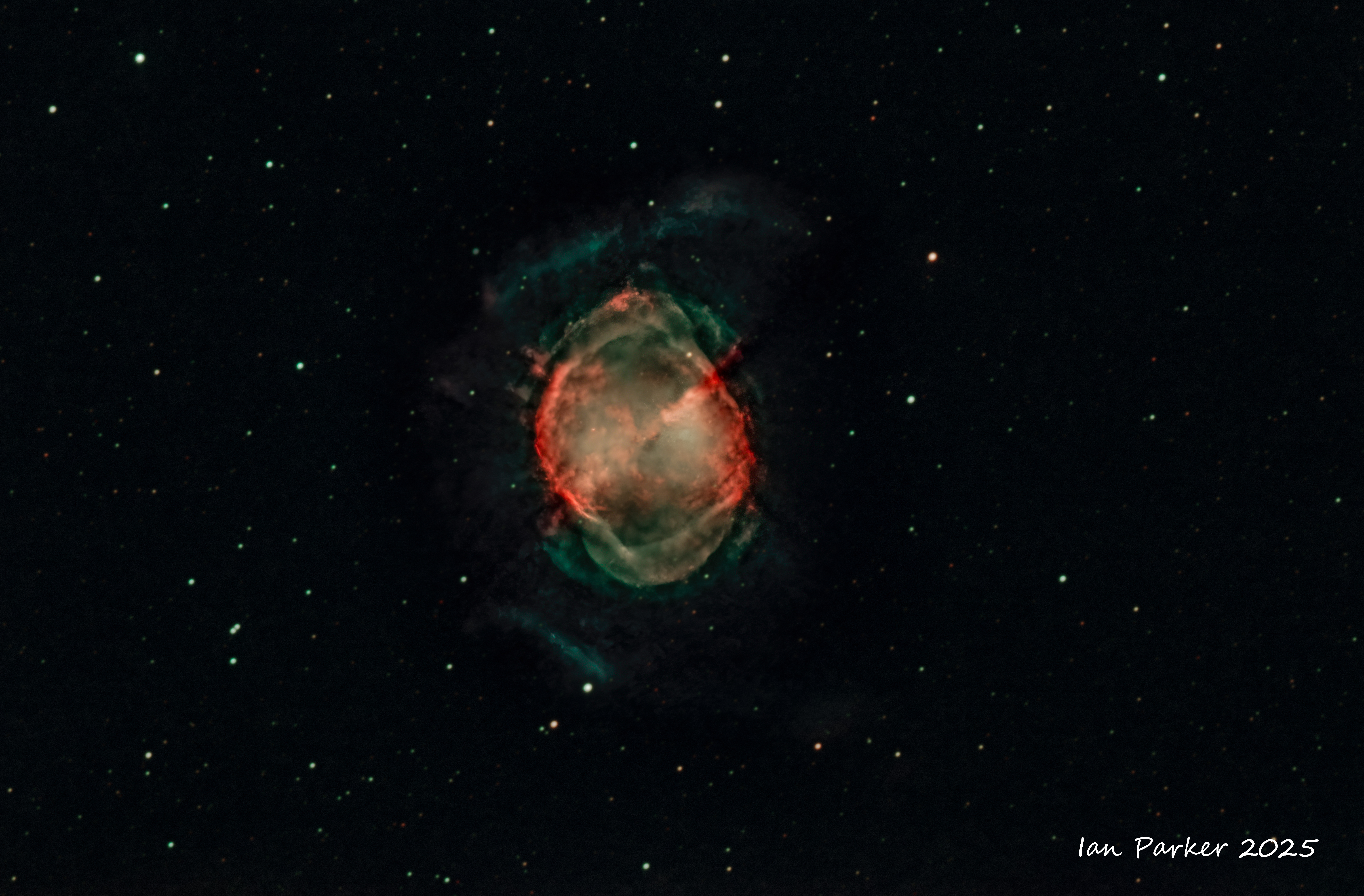
 M97 the Owl Nebula
Edge8 with 0.7 reducer, ASI 2600MC Pro, AM3, Optolong ultimate Ha/OIII, 80 x 300s subs, backyard, Bortle 8/9
M97 the Owl Nebula
Edge8 with 0.7 reducer, ASI 2600MC Pro, AM3, Optolong ultimate Ha/OIII, 80 x 300s subs, backyard, Bortle 8/9 |
|
| |
 Jones-Emberson 1 The Headphones Nebula
Edge8 with 0.7 reducer, ASI 2600MC Pro, AM3, Optolong ultimate Ha/OIII, 80 x 300s subs, backyard, Bortle 8/9
A rewarding but very faint target _ hope to get more time on it
Jones-Emberson 1 The Headphones Nebula
Edge8 with 0.7 reducer, ASI 2600MC Pro, AM3, Optolong ultimate Ha/OIII, 80 x 300s subs, backyard, Bortle 8/9
A rewarding but very faint target _ hope to get more time on it |
|
| |
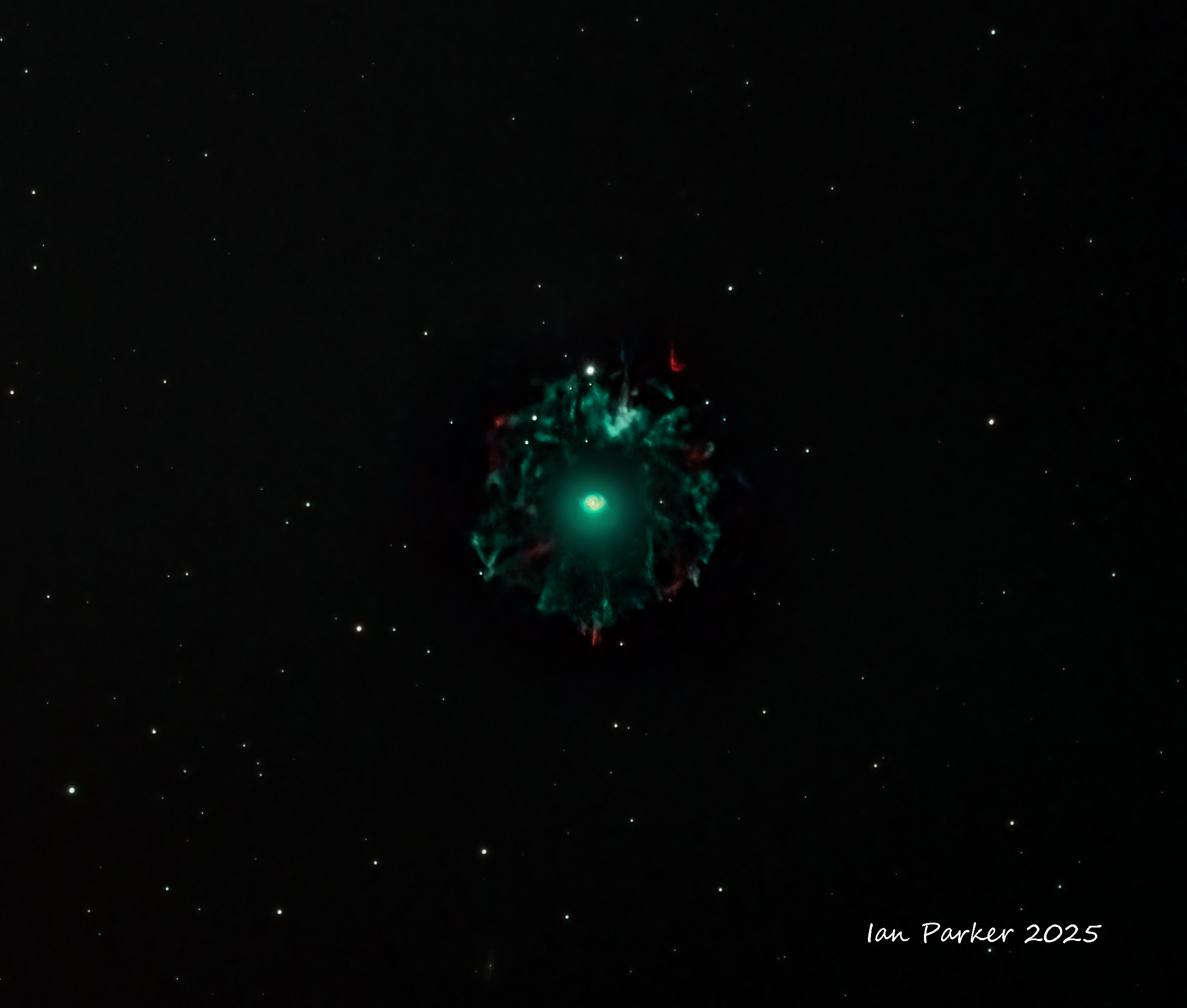
 The Lemon Slice nebula (IC 3568)
Edge8 with 0.7 reducer, ASI 2600MC Pro, AM3, Optolong ultimate Ha/OIII,120 x 60s subs, backyard, Bortle 8/9
The Lemon Slice nebula (IC 3568)
Edge8 with 0.7 reducer, ASI 2600MC Pro, AM3, Optolong ultimate Ha/OIII,120 x 60s subs, backyard, Bortle 8/9
A VERY tiny (but bright) target. It is named because the inner, bright part resembles the segments of a sliced lemon. However, I could not resolve any detail. I might try again using 'lucky' imaging with many exposures of 10s or shorter
|
|
| |
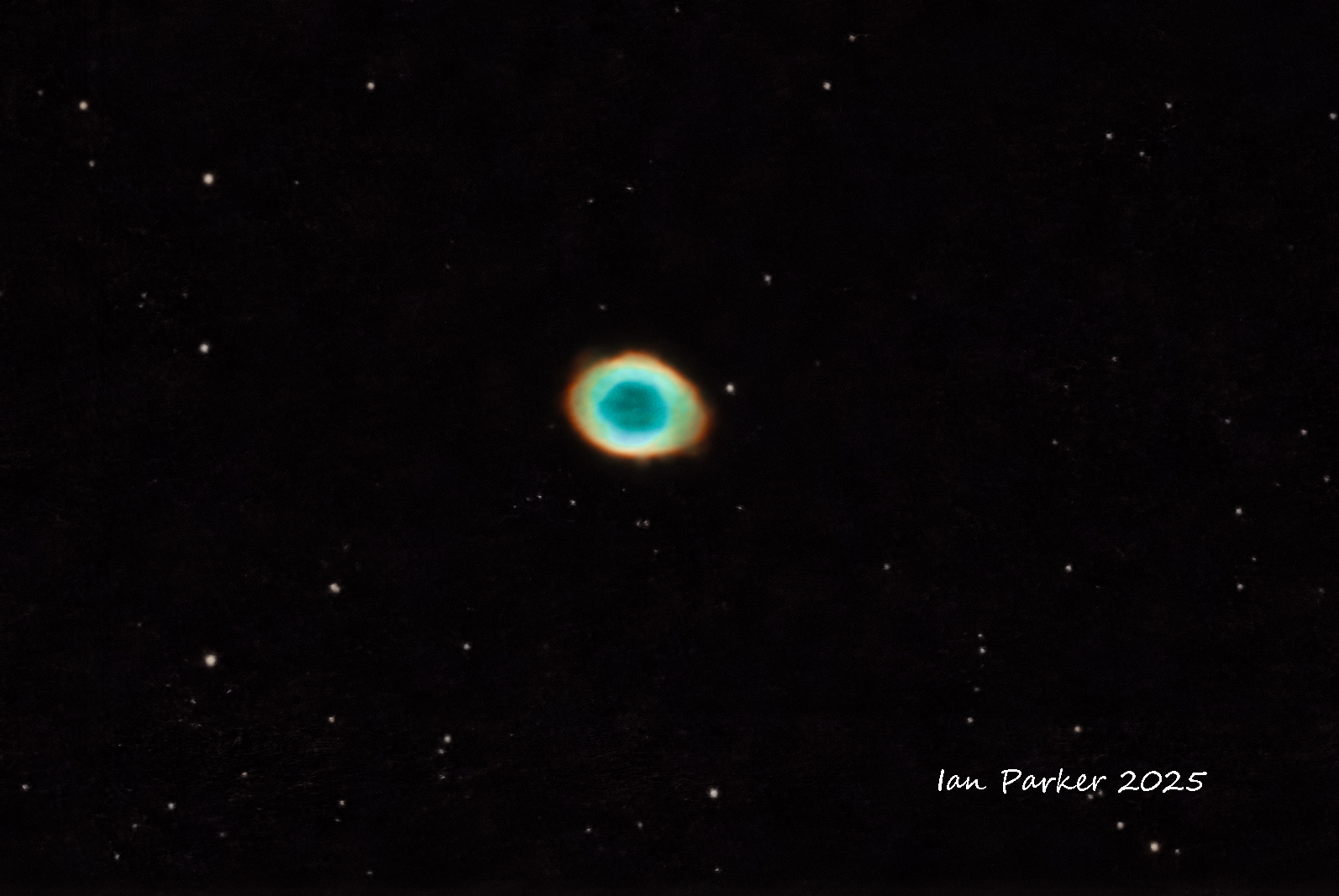
 The Ghost of Jupiter (NGC 3242)
Edge8 with 0.7 reducer, ASI 2600MC Pro, AM3, Optolong ultimate Ha/OIII,120 x 60s subs, backyard, Bortle 8/9
A slightyly bigger targer, where I was able to resolve some structure, and the central white dwarf star. This planetary nebula is most frequently called the Ghost of Jupiter,due to its similar shape and apparent size to the planet, but it is also sometimes referred to as the Eye Nebula |
|
| |
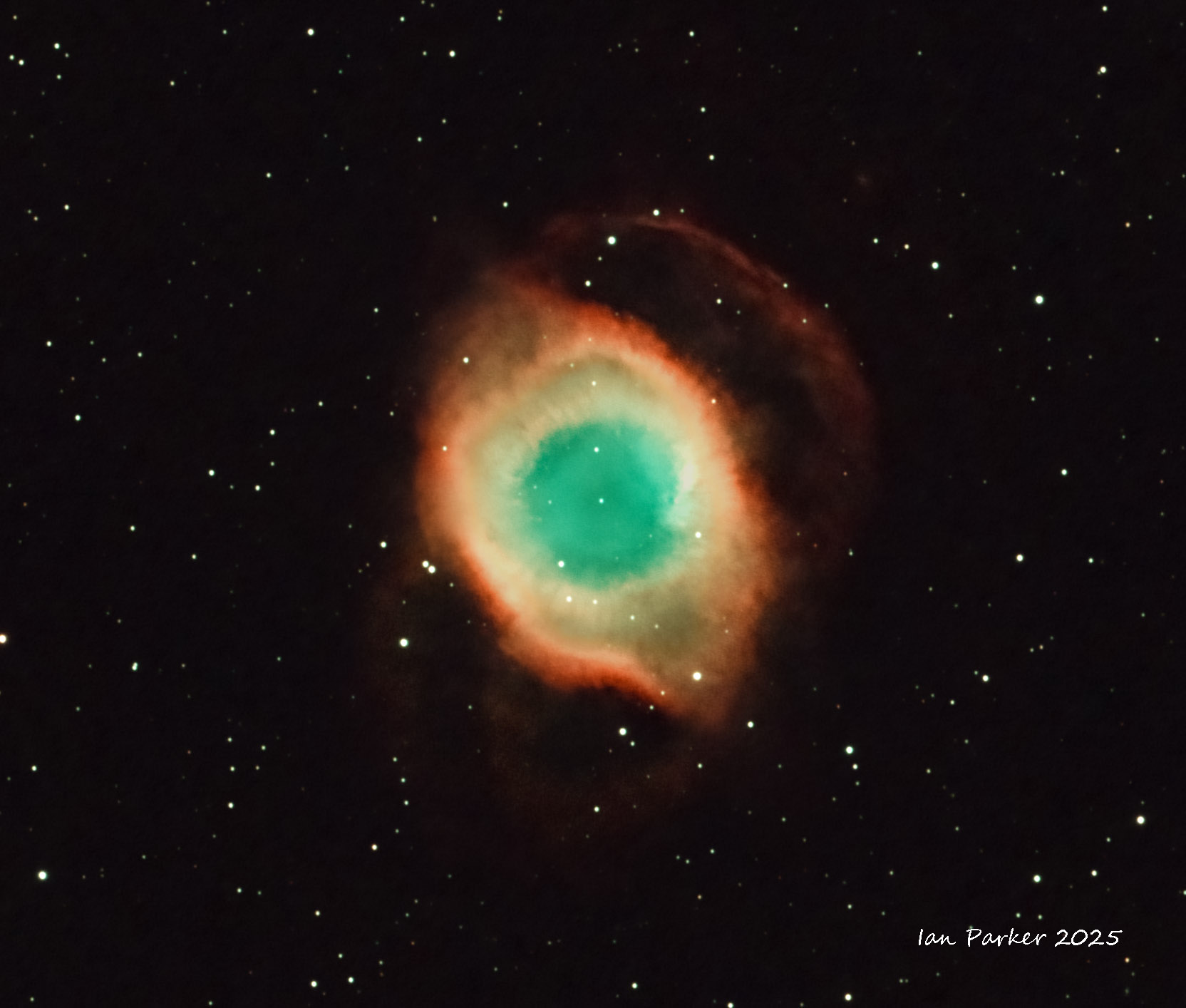
 Helix Nebula NGC 7293
Celestron C8 EDGE, Ha/OIII Optolong Ultimate narrowband filter 3 hrs integration under Bortle 3 skies.
Helix Nebula NGC 7293
Celestron C8 EDGE, Ha/OIII Optolong Ultimate narrowband filter 3 hrs integration under Bortle 3 skies. |
|
Last updated 04/14/2026
|
|
| |
Please send enquiries to evanescentlightphotography@gmail.com
|
|
|
|